Application guide
Active Australia Innovation Challenge

The Heart Foundation is offering multiple grants up to the value of $30,000 for new, innovative projects that get more people moving in schools, universities or local community groups. This guide will help give you, and your project idea, the best chance.
What is the Active Australia Innovation Challenge?
We are encouraging community groups, councils, schools (preschools, primary and secondary), tertiary institutions (universities, TAFEs, colleges), and other organisations to come up with an innovative idea to encourage physical activity in a chosen group or community.
Community members/individuals will need to either hold a current Australian Business Number (ABN) or partner with an eligible entity (one that holds a current ABN) for the project to be considered eligible, and to enable a funding agreement to be executed.
If you are working with another organisation, the organisation holding the ABN must submit the application. They will be responsible for receiving and managing the grant and be accountable for the delivery of the project.
Application process
Who can apply?
- Community groups e.g. residents’ groups, parents’ groups, environmental groups, sporting organisations, Scouts and Girl Guides, community centres, councils, schools (preschools, primary and secondary), tertiary institutions (universities, TAFEs and colleges), and other organisations
- Community members/individuals (see requirements below)
- Previous winners of the Active Australia Innovation Challenge will need to demonstrate an enhancement or expansion of the previously awarded project, or a new innovative idea, to be eligible to enter in 2026.
- Those with a previously submitted project who were not awarded a grant, who have updated or enhanced their original idea

What projects will we fund?
The grant provides funding to kick-start a project or to support a larger project. If the grant is supporting a larger project, documentation will need to be provided to confirm funding has already been sought to fulfil the project implementation and how this grant may support the larger project. The Heart Foundation strongly encourages innovative projects that support people:
- identifying as Aboriginal or Torres Strait Islander
- with culturally and linguistically diverse backgrounds
- living with a disability
- living in rural and remote regions.
What we cannot fund
We may have to decline applications that do not meet the eligibility criteria, or where we are unable to see a clear alignment to the primary goals of the initiative. The following is a list of projects and applications that are ineligible. Please take the time to read through this list to ensure your project matches what we are looking for.

|
Projects that have been implemented or completed prior to the application being submitted. |

|
Projects that are deemed to be ‘business as usual’ for the organisation applying. |

|
Projects that don’t have the primary objective of ‘increasing physical activity’ for the chosen group or community. |

|
Projects that cannot be completed within 12 months of receiving the grant. |

|
Projects that are not low cost. Projects that charge a small fee will be eligible if they are:
|

|
Projects that are outside of Australia. |

|
Projects seen to primarily benefit an applicant or business, for example increasing profits, increasing revenue sources, and/or covering existing employee salary costs for the duration of the funded project. |

|
Where the applicant is unable to enter into a Funding Agreement with the Heart Foundation. Community members/individuals will need to either hold a current Australian Business Number (ABN) or collaborate with an eligible entity (one that holds a current ABN) to enable a funding agreement to be executed. In a ‘collaboration scenario,’ the organisation holding the ABN must submit the application. They will be responsible for receiving and managing the grant and be accountable for the delivery of the project. |
How applications will be scored
Community need
Is there an identified need in the target group or community for the project?
Have the barriers to being physically active in the chosen group or community been identified?
Will the community and other stakeholders be effectively utilised to help develop and implement the project?
Does the applicant describe a creative or new idea for a project, partnership, product and/or process to increase physical activity within the specific group or community?
Capacity and Sustainability
Has planning for the future of the project occurred?
Is the project sustainable in similar groups or communities?
Alignment to grant outcomes
Does the project effectively engage and address the needs of individuals who are not currently meeting the national physical activity guidelines, those at risk of chronic disease, and communities experiencing high levels of physical inactivity
Is a comprehensive process planned to develop and implement the project?
Timeframe and budget
Have timeframes and budgets been identified?
Consider:
time constraints
legislative or regulatory constraints
technical constraints
safety concerns (or similar)
What we consider an innovative idea
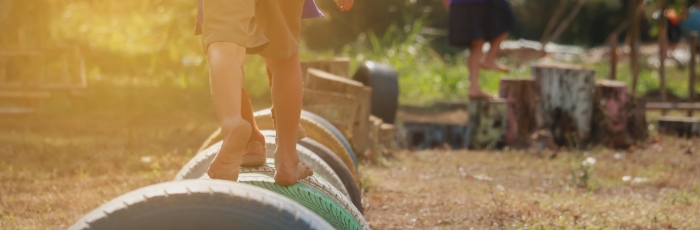
We’re looking for creative and innovative ideas for project collaborations, products, or processes that aims to increase physical activity within a specific group or community. The concept should reflect local relevance, recognising that what is considered innovative in one location may differ across other settings in Australia. Importantly, your project must be designed to benefit your community and address the unique needs of your target group.
What to consider before applying
- Your target audience
- Why your project idea is innovative
- What you hope to achieve with this project
- What outcomes will you measure and how do you plan on measuring these
- An Australian Business Number (ABN)
- Budget breakdown and future goals.
Key dates
Applications open: Monday 2 February 2026, 9:00am AEDT
Applications close: Sunday 1 March 2026, 5:00pm AEDT
Finalists advised: Friday 10 April 2026
Finalists pitch to judges: Monday 4 May - Friday 8 May 2026
Grant recipients advised: Friday 15 May 2026

Key links
How to answer application questions
Below are the application questions, and tips on what the judges will be looking for. You can save your progress and come back to it later when competing the application form. Please note: The ABN of the organisation that is supporting your project idea must be included when registering to submit your application.
Q1. Project title
Q2. Grant amount you are applying for ($10,000, $20,000 or $30,000)
The judging panel will be awarding up to 15 grants of varying amounts. Please consider exactly how much you require to effectively deliver your project, rather than selecting the highest amount automatically.
Q3. Who is this project for? Who is your target group or community?
Check the box in the online application for the group or community that your project has been designed for.
Q4. Why was this group or community chosen?
- Clearly articulate the group or community and why your project is aimed towards them. i.e. who, where, how many.
- Identify the need (sufficient evidence/rationale) for your project in this target group or community for the project.
- Consider the barriers to being physically active in this group or community and, if known, the reasons why this group or community are not active enough
Character limit 1060
Q5. Please provide a brief summary of your project
- Clearly describe your project. i.e. key activities, format, main components or how it will run.
- Focus on what will actually happen during the project.
Character limit: 2200
Q6. What do you hope to achieve with this project?
The judges will assess:
- How well the objectives of this project have been clearly articulated
- How this project will make a difference to the sustainable levels of physical activity in a chosen group or community
Importantly, include how your project will make a difference to the level of physical activity in your chosen group or community.
Character limit: 1060
Q7. Describe how your idea is innovative in encouraging people to be more physically active.
The judges will assess:
- How innovative/new/creative is this project in encouraging the target group or community to be more physically active.
- Note: The applications may describe an innovative project idea, collaboration, product and/or process.
- What’s innovative in one area may not be in another area or setting across Australia.
Make sure you describe how your project is different or new for your chosen group/community and/or region.
Character limit: 1060
Q8. How are you going to measure the outcomes of the project?
What evaluation methods will be used? e.g. participant feedback, pre and post survey, attendance rates.
Character limit: 530
Q9. Describe how the project can be maintained or progressed past the conclusion of the funding period.
The judges will assess:
• Has consideration been given to the continuation of this project post AAIC funding?
• Can the project idea be replicated in similar groups or communities?
• Does this project have potential to be implemented on a larger scale, i.e. nation-wide or sector-wide?
Character limit: 530
Q10. Please provide a detailed breakdown of how you intend to spend the grant over the course of the project.
The judges will assess:
• Are the timeframes for the project realistic?
• Is the budget for the project realistic and appropriate?
• If there are participant costs, are they reasonable/sustainable lease describe how they have been determined and what they will be used for.
This submission will be in a table format, asking for the budgets items and costs associated.
Q11. Are there any participant costs associated with your project? If so, what are they?
Please describe how they have been determined and what they will be used for.
Character limit: 530
Further information

Grant overview: Application to project completion
Read a clear 12‑step overview of the Active Australia Innovation Challenge, from applying for the grant to completing your community project.

Sample grant application
Sample application with questions and example answers to help you understand requirements for the Active Australia Innovation Challenge.
2025 Active Australia Innovation Challenge grant recipients
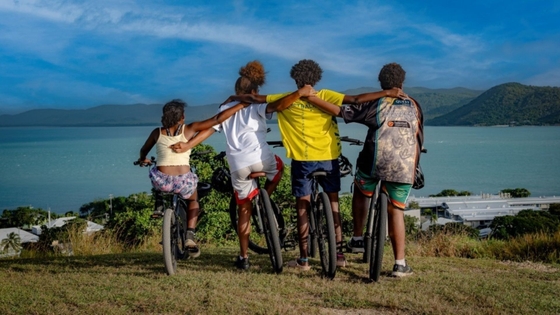
The Heart Foundation, with support from the Australian Government, announces the eight recipients of this year’s Active Australia Innovation Challenge (AAIC), with the winning projects showcasing the diversity of physical activities for many communities across the country
Last updated01 February 2026